THE
ISLAND.
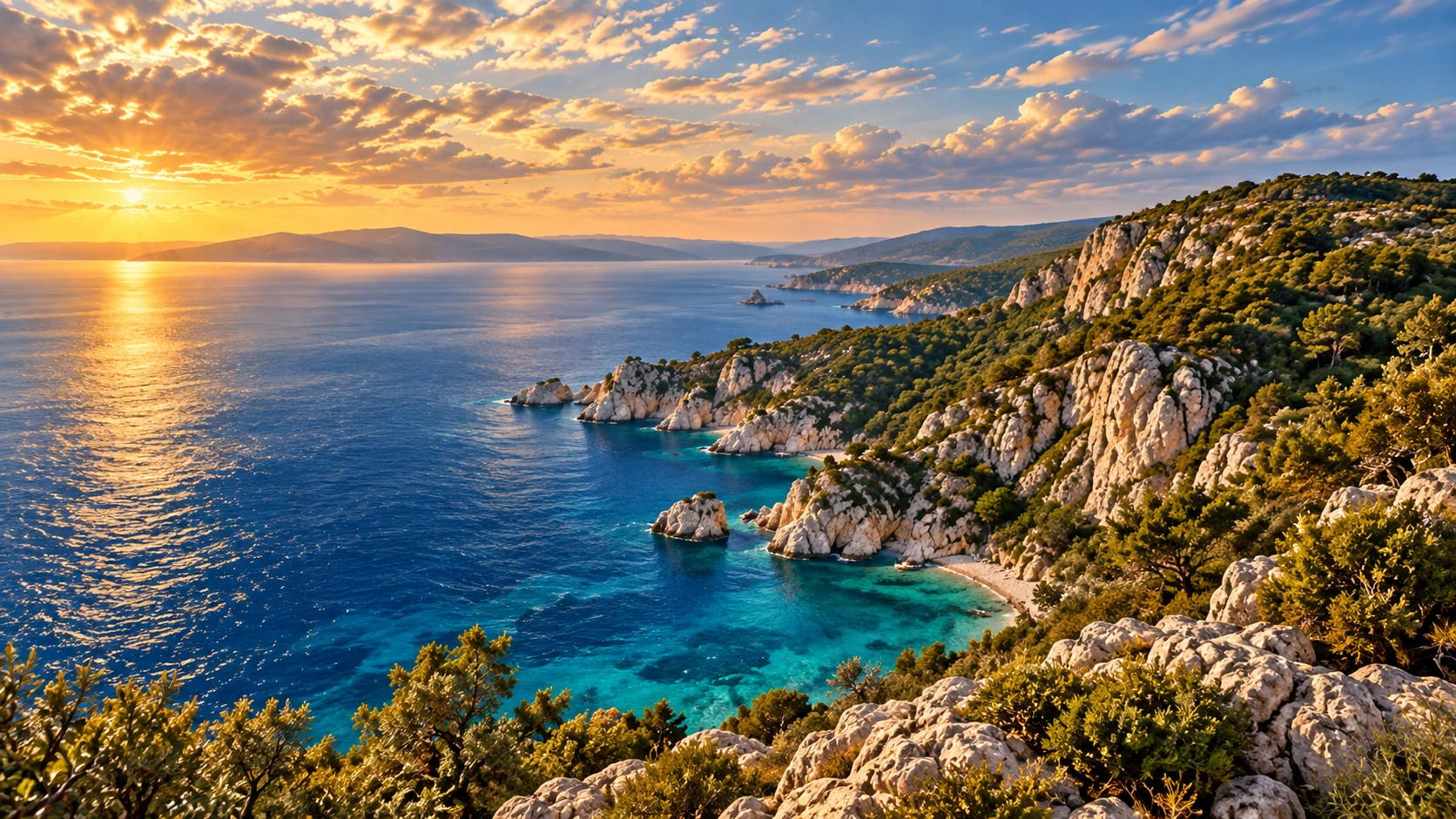
Cres is less a checklist than a sequence of landscapes: forest, karst, olive country, villages, cliffs and long views across the northern Adriatic.
Wildness has a geography.
Northern Cres is greener and more wooded. Elsewhere, the terrain opens into limestone, pasture and exposed coastline. Historic settlements occupy harbours, slopes and high ground, while many coves remain separated from the road by footpaths or sea.
This physical variety is not background scenery. It is the island’s main storytelling asset.
Bay, town, olive country.
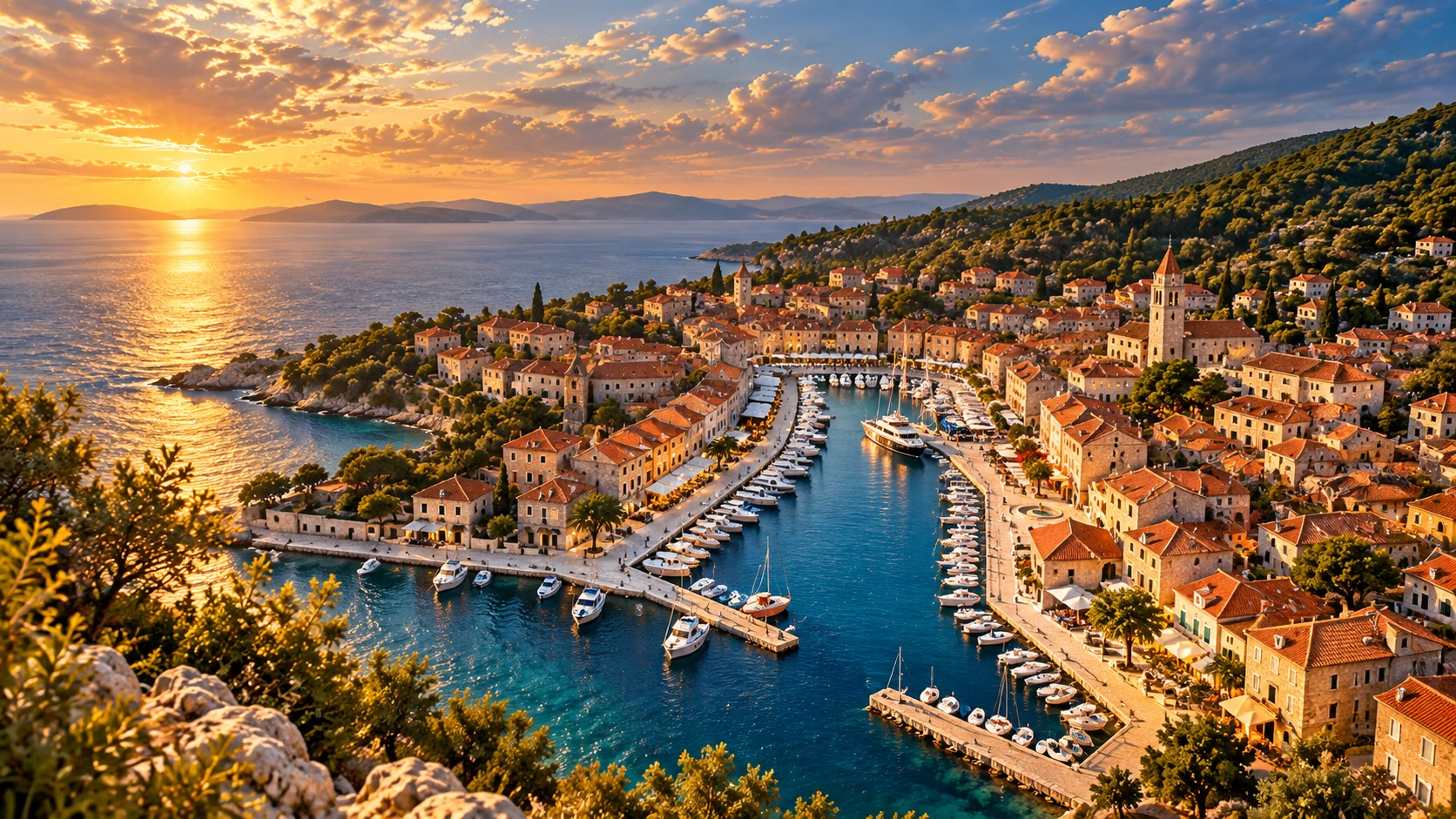
Cres town sits on a sheltered bay. The official destination guide describes the surrounding fertile land as olive-growing country and the old centre as a maze of narrow streets shaped by centuries of island life.
Clarity matters.
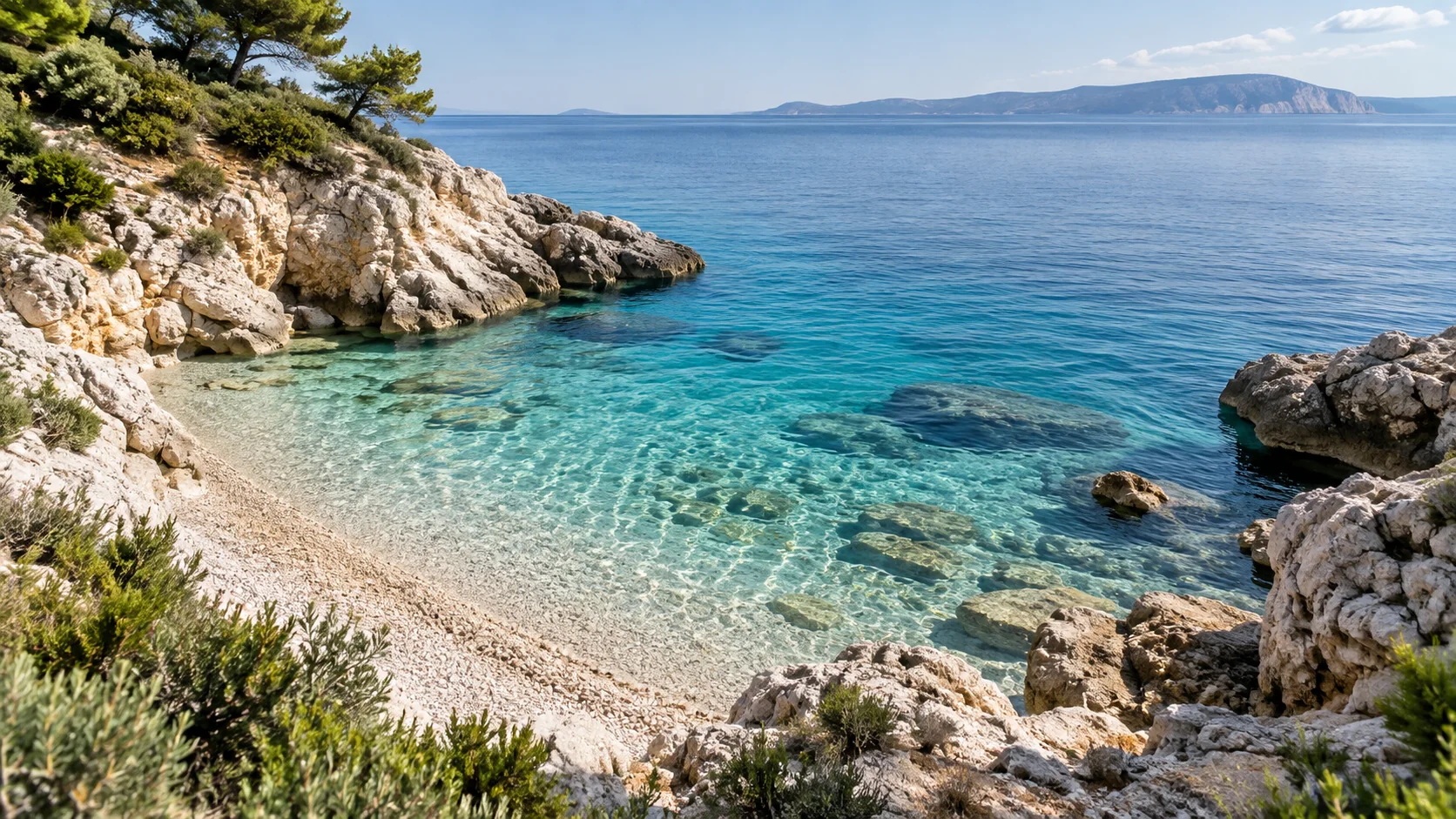
Cres is not only read from viewpoints. It is also read at water level — in clear coves, pale stone edges and the calm precision of the Adriatic when the landscape becomes almost minimal.
Forest & north
Beli and northern Cres bring woodland, steep terrain and the griffon-vulture story.
Karst & pasture
Open limestone country gives the central island its austere, elemental character.
West coast
Valun, Lubenice and coves facing the open Adriatic create a softer, sunset-facing rhythm.
It needs to become clearer.
The strongest premium position is not excess. It is protected space, depth of place and a slower relationship with the Adriatic.